

Understanding the Importance of Airline Non-Slip Trays in Disposable Tableware
Release Time:
Jul 18,2026
In the airline industry, the safety and comfort of passengers are paramount. One critical aspect that often goes unnoticed is the equipment used for serving food and beverages. Airline non-slip trays play a vital role in this context, providing a stable and secure platform for meals and drinks, thereby contributing to a smoother in-flight experience.
One of the primary reasons for utilizing non-slip trays in airline services is their ability to minimize accidents caused by spilled liquids or dropped items. During turbulence, traditional trays may slide or tip, causing a mess and potential harm to passengers. Non-slip trays are specifically designed with materials and surfaces that enhance grip, reducing the likelihood of sliding, even in challenging conditions. This feature is particularly significant in the confined space of an airplane cabin, where movement is limited, and the risk of spills is heightened.
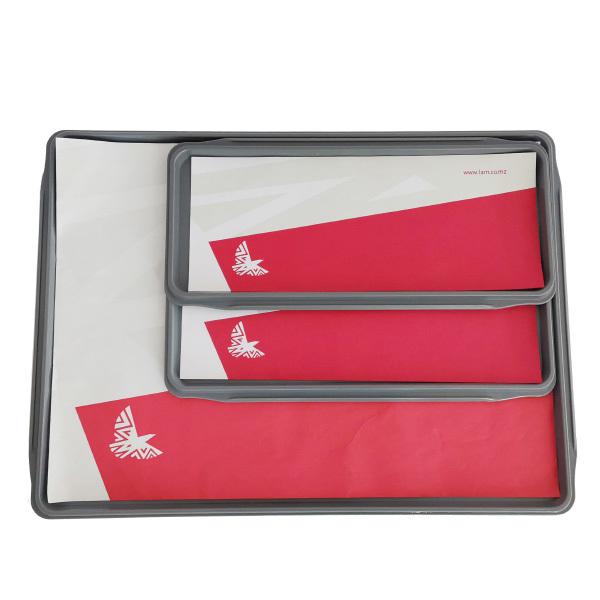
From a design standpoint, airline non-slip trays often incorporate features that not only prioritize functionality but also enhance the aesthetic appeal of in-flight dining. The use of high-quality materials ensures that trays are lightweight yet durable, allowing for easy handling by flight attendants. Moreover, these trays can be manufactured in various shapes and sizes, catering to different meal presentations while maintaining the non-slip functionality.
In addition to safety and aesthetics, non-slip trays contribute to operational efficiency for airlines. The incorporation of disposable materials in non-slip tray manufacturing means that airlines can streamline their service processes. These trays can be designed for single use, reducing the need for extensive cleaning and sanitization, thereby saving time and resources. This ease of use can improve the overall service speed, allowing flight crews to focus more on customer interaction rather than logistical challenges.
Moreover, airlines can benefit from the eco-friendliness of certain disposable materials used in the production of non-slip trays. As sustainability becomes increasingly important in the airline industry, the shift towards biodegradable or recyclable options can enhance a company's image while fulfilling environmental responsibilities.
In conclusion, airline non-slip trays are more than just functional objects; they are vital tools that enhance passenger safety, streamline service, and align with sustainable practices. By investing in high-quality non-slip trays, airlines can significantly improve the in-flight dining experience while addressing safety concerns and operational efficiency. Understanding the importance of these trays is crucial for anyone involved in the aviation or disposable tableware industry, as their impact extends far beyond simple meal service.
One of the primary reasons for utilizing non-slip trays in airline services is their ability to minimize accidents caused by spilled liquids or dropped items. During turbulence, traditional trays may slide or tip, causing a mess and potential harm to passengers. Non-slip trays are specifically designed with materials and surfaces that enhance grip, reducing the likelihood of sliding, even in challenging conditions. This feature is particularly significant in the confined space of an airplane cabin, where movement is limited, and the risk of spills is heightened.
From a design standpoint, airline non-slip trays often incorporate features that not only prioritize functionality but also enhance the aesthetic appeal of in-flight dining. The use of high-quality materials ensures that trays are lightweight yet durable, allowing for easy handling by flight attendants. Moreover, these trays can be manufactured in various shapes and sizes, catering to different meal presentations while maintaining the non-slip functionality.
In addition to safety and aesthetics, non-slip trays contribute to operational efficiency for airlines. The incorporation of disposable materials in non-slip tray manufacturing means that airlines can streamline their service processes. These trays can be designed for single use, reducing the need for extensive cleaning and sanitization, thereby saving time and resources. This ease of use can improve the overall service speed, allowing flight crews to focus more on customer interaction rather than logistical challenges.
Moreover, airlines can benefit from the eco-friendliness of certain disposable materials used in the production of non-slip trays. As sustainability becomes increasingly important in the airline industry, the shift towards biodegradable or recyclable options can enhance a company's image while fulfilling environmental responsibilities.
In conclusion, airline non-slip trays are more than just functional objects; they are vital tools that enhance passenger safety, streamline service, and align with sustainable practices. By investing in high-quality non-slip trays, airlines can significantly improve the in-flight dining experience while addressing safety concerns and operational efficiency. Understanding the importance of these trays is crucial for anyone involved in the aviation or disposable tableware industry, as their impact extends far beyond simple meal service.
Contact Infromation
Email: info@kairunair.com
Email: kairun11@kairun.com
Email: kairun9@kairun.com
Email: kairun15@kairunair.com
Tel: 0086-592-5885238
Tel: 0086-592-5887748
Tel: 0086-592-5885635
Wechat/Whats app: 0086 18965858595
Wechat/Whats app: 0086 18030153826
Wechat/Whats app: 0086 18965858597
Head Office: Unit 1009, No. 95 East Hubin Road, Siming District, Xiamen, China
Social Networks

Sign up for our monthly newsletter for the latest news & articles

Copyright © Xiamen Kairunair Commodity Co., Ltd. All Rights Reserved.