

Maximizing Safety and Efficiency: The Importance of Airline Non-Slip Trays
Release Time:
Nov 27,2024
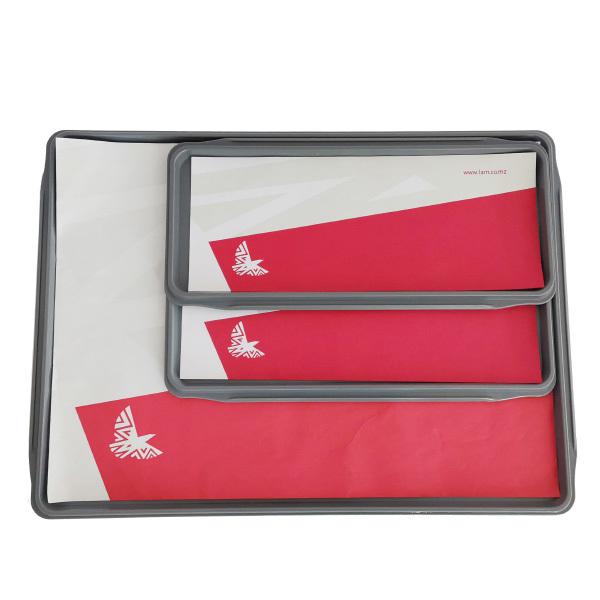
In the airline industry, where efficiency and safety are critical, the use of airline non-slip trays has become increasingly important. These trays are specifically designed to prevent spills and accidents during service, ensuring that food and beverages remain securely in place, even during turbulence or sudden movements. One of the primary advantages of non-slip trays is their ability to enhance the overall passenger experience. When food and drinks are served without the risk of sliding or spilling, passengers can enjoy their meals without unnecessary stress.
The materials used in creating airline non-slip trays are carefully selected to provide both durability and functionality. Typically made from lightweight yet robust plastics or composites, these trays are easy to handle and transport while being resistant to the wear and tear of frequent use. The non-slip surface is often engineered to provide grip, ensuring that items remain stable during transport. This design feature is particularly beneficial during meal service, where flight attendants must navigate narrow aisles and fasten seatbelts.
Another crucial aspect of airline non-slip trays is their contribution to sanitation and hygiene within aircraft. Many trays are designed to be disposable, allowing for easy cleanup and reducing the risk of cross-contamination. This is especially important in the current global climate, where health and safety concerns are at the forefront of travelers' minds. Airlines that prioritize the use of disposable non-slip trays demonstrate a commitment to maintaining a clean and safe environment for their passengers.
In addition to safety and hygiene, airline non-slip trays also provide operational efficiency. By minimizing spills, airlines can reduce the amount of time staff spend cleaning and managing accidents, allowing them to focus on providing quality service to passengers. Moreover, the use of non-slip trays can lead to a decrease in food waste, as items are less likely to be discarded due to spills. This efficiency not only improves the overall service experience but also contributes to cost savings for the airline.
In conclusion, airline non-slip trays serve as a vital component in the airline industry, enhancing safety, hygiene, and operational efficiency. Their design and functionality ensure that passengers enjoy their travel experience to the fullest, while also allowing airlines to streamline their service processes. As airlines continue to adapt to passenger needs and industry demands, the importance of incorporating non-slip trays into their service offerings cannot be overstated. Investing in high-quality, reliable non-slip trays is a step towards ensuring a safer and more enjoyable journey for all passengers.
The materials used in creating airline non-slip trays are carefully selected to provide both durability and functionality. Typically made from lightweight yet robust plastics or composites, these trays are easy to handle and transport while being resistant to the wear and tear of frequent use. The non-slip surface is often engineered to provide grip, ensuring that items remain stable during transport. This design feature is particularly beneficial during meal service, where flight attendants must navigate narrow aisles and fasten seatbelts.
Another crucial aspect of airline non-slip trays is their contribution to sanitation and hygiene within aircraft. Many trays are designed to be disposable, allowing for easy cleanup and reducing the risk of cross-contamination. This is especially important in the current global climate, where health and safety concerns are at the forefront of travelers' minds. Airlines that prioritize the use of disposable non-slip trays demonstrate a commitment to maintaining a clean and safe environment for their passengers.
In addition to safety and hygiene, airline non-slip trays also provide operational efficiency. By minimizing spills, airlines can reduce the amount of time staff spend cleaning and managing accidents, allowing them to focus on providing quality service to passengers. Moreover, the use of non-slip trays can lead to a decrease in food waste, as items are less likely to be discarded due to spills. This efficiency not only improves the overall service experience but also contributes to cost savings for the airline.
In conclusion, airline non-slip trays serve as a vital component in the airline industry, enhancing safety, hygiene, and operational efficiency. Their design and functionality ensure that passengers enjoy their travel experience to the fullest, while also allowing airlines to streamline their service processes. As airlines continue to adapt to passenger needs and industry demands, the importance of incorporating non-slip trays into their service offerings cannot be overstated. Investing in high-quality, reliable non-slip trays is a step towards ensuring a safer and more enjoyable journey for all passengers.
Contact Infromation
Email: info@kairunair.com
Email: kairun11@kairun.com
Email: kairun9@kairun.com
Email: kairun15@kairunair.com
Tel: 0086-592-5885238
Tel: 0086-592-5887748
Tel: 0086-592-5885635
Wechat/Whats app: 0086 18965858595
Wechat/Whats app: 0086 18030153826
Wechat/Whats app: 0086 18965858597
Head Office: Unit 1009, No. 95 East Hubin Road, Siming District, Xiamen, China
Social Networks

Sign up for our monthly newsletter for the latest news & articles

Copyright © Xiamen Kairunair Commodity Co., Ltd. All Rights Reserved.